


Your Student Is On Social Media Even Though You Think They're Not
How many of you decided to sneak something out of your house when you were younger even though your parents told you not to?
I was perfect, so this doesn’t apply to me. ??But Jami has a number of stories where she snuck clothes and makeup out in her backpack on the way to school or a church event. Her parents told her she couldn’t wear the outfit she wanted to wear. So, instead of listening, she decided she would walk out the door in their approved clothing attire. Then change right after arriving to where ever she was going. Then change back before getting picked up or getting home. The whole time, her parents were naive to the fact that their little angel wasn’t following the rules they have set.
Times aren’t much different. We’ve caught Morgan trying to sneak out clothes in her backpack prior to getting on the bus. Knowing what we know, we decide to do what we call, “Spot prison searches.” Ok, we don’t really call them that. But our children (ages 13 & 15) know that we can, and will spot check bags, rooms and yes… phones. Not because we’re nosy… even though we are. Not because we want to make their lives miserable… even though that’s a plus if they’re doing wrong. No. It’s really not for either of those two reasons. We reserve the right to do spot checks because we care. Because we are trying to protect them. Because we want the best for them. We know things they don’t. We can foresee problems and dangers that they can’t foresee. So it’s up to us to teach and guide our children to the best of our ability.
Quick disclaimer before we move on... We don't have all the answers. This is simply the way we're choosing to parent our children and social media.
The same is true with social media. I’ve talked to a lot of parents who pride themselves that their student isn’t on social media. The reasons are many and range from…
We don’t know anything about social media so we'e not going to let our student be on it.
Social media is so negative and full of drama. There’s just so much bad stuff on there so we're going to keep our student off of it.
There’s social predators out there that can take advantage of students, so our student won’t be on it cause it scares us.
Students are on social media too much, so we’re just going to keep our student off of it.
All of those reasons aren’t bad reasons. They’re valid and real. But they aren’t reasons that your student will stay off of social media. And that’s the real scary part. Because, to think that your student isn’t on social media is naive. Your student(s) may not have social accounts with their names listed. But time and time again I have heard stories from parents who had banned their student from social media only to receive a phone call from a school official, law enforcement officer or coach informing those same parents that their student was in trouble for what they had posted or sent on social media.
How could that be? You ask… good question. One, students today will either make a social account that isn’t related to their real name so that they can connect digitally but not come up on their parents radar should they search Instagram (for example) using their real name. Or, when they go to a friend’s house, the first thing they do is jump on their friend’s social account to chat, send photos, messages, or posts. Whether it’s Instagram, Facebook, SnapChat, TikTok, etc… the student who isn’t allowed to have their own social account is going to their friend’s house and jumping on theirs. It’s kinda like when some my friends came over to my house back in the day. They didn’t want to play outside, they just wanted to watch tv and drink pop all day. Why? Because their parents wouldn’t allow them to watch tv and drink pop.
It’s. The. Same. Exact. Thing.
But the potential consequences are far much worse. We’re not talking about simply getting cavities because the student has drank too much Mountain Dew. The consequences with social media can be much more serious and life-altering for our students when they don’t have any guidance on how to use it responsibly.
That’s why, for us and our students, we have decided to allow them to have Facebook, TikTok, Instagram and SnapChat accounts when they reached the age the social platforms allowed them to sign up. We didn’t just let them sign up and wish them good luck. We signed them up ourselves and put some safeguards in place. Safeguards like:
We kept their passwords… meaning, they didn’t have access to them. They didn’t know what they were.
People couldn’t add them or follow them without our approval on the accounts that had that privacy option.
We don’t allow our students’ friends on our students’ social accounts.
If we find a “fake” account that our students have created, “all” of their accounts will be shut down in addition to receiving offline consequences.
We reserve the right to spot check our students’ phones and social media accounts.
We give them guidelines on what to post. We discuss when we think posts should be removed. We let them know over and over and over and over and over again that everything they post is… Instant. Global. And Permanent. What they post today, can have severe, negative consequences years from now.
Yes, allowing our students to have social media accounts was a hard decision. It should be. And yes, it has and is and will take a lot of work on our part. We monitor our students’ social accounts and our students’ friends’ accounts when possible. We also try to stay up to date on the current digital trends. We have decided to not use time as an excuse on not allowing our students to be on social media. And we think it’s worth it. Our students are going to make mistakes. Offline and online. And I’d rather our student make a mistake early when the mistake is less likely to be life-altering and when we can still have influence in their lives. If we don’t have these discussions with them now and teach them how to use social media now, they won’t know how to use it in the future. The mistakes that are being made now, is nowhere near as big as they could be in the future if we didn’t teach and guide them now.
Just like we went to the mall for our social connection or talked on phones for hours, our students today are going digital for their social connections. And that means that, even though you tell them they can’t have their own social accounts, they will find a way to discover and explore those connections digitally. (Just like I found my way to the mall, even though I told my mom I was going to Ben's house.) It’s just a fact, students connect digitally with each other. And while some people would rather their students build relationships offline, the digital world they live in will only be getting bigger… especially in today’s climate.
Our job as parents isn’t to put our head in the sand and pretend that if we say no it won’t happen. Our job as parents is to guide and teach our students. This is the way that Jami and I have decided to handle social media with our students. Again, it's not that we have all the answers. It's just our way of doing things. I hope you’ve found it helpful. Please know that I’ll also have additional posts about students and social media that I think will be helpful as well. Looking forward to sharing those posts.
Thoughts on social media? Questions? Ready. Set. Comment.

Quarantine and the Pressure to Be the Best Parent Ever
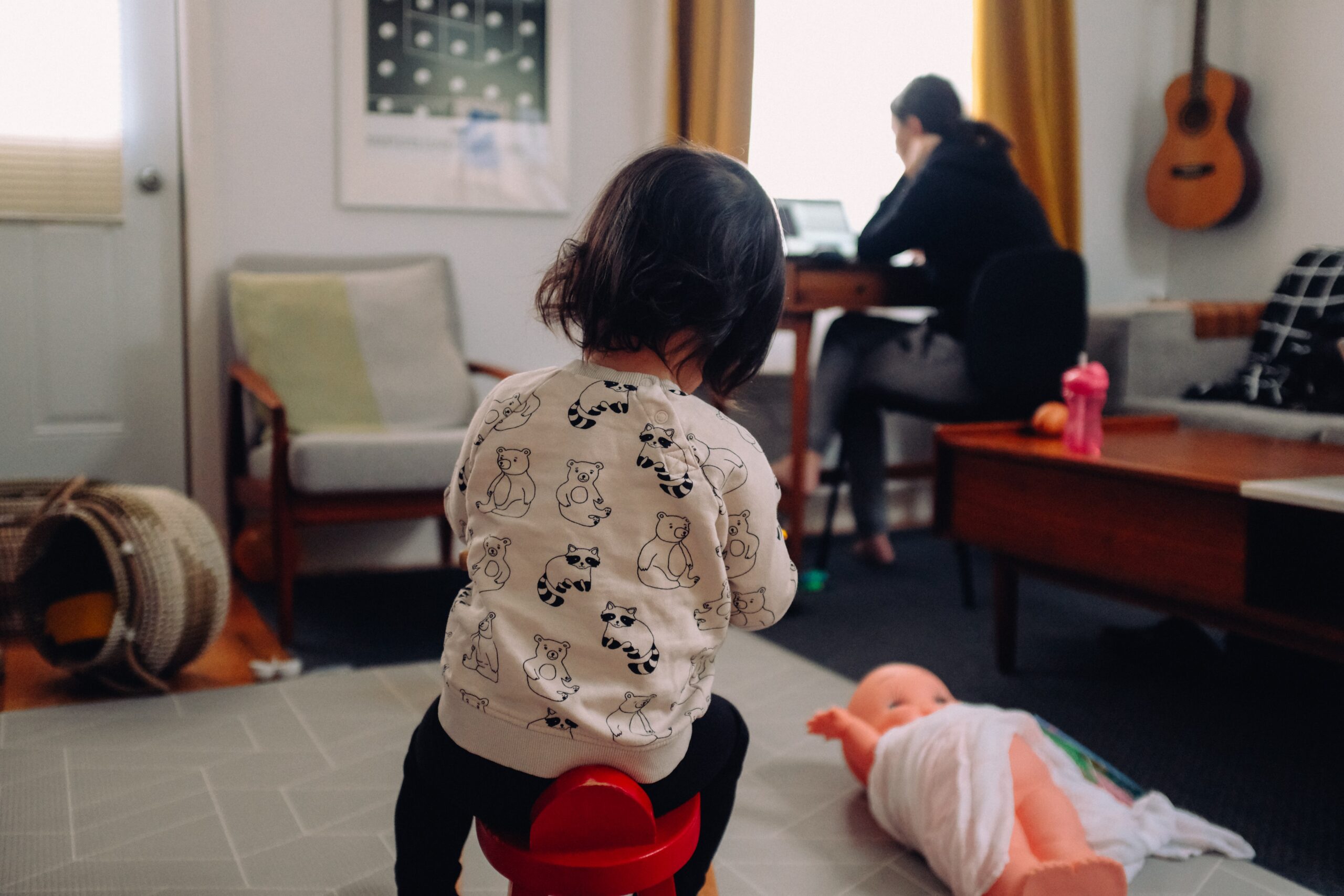
There are moments that I sit and think, "Is this really happening? Is this real?"
Yup. The world is literally upside down. One bat. One man. One virus has literally brought the world to a virtual halt. (By the way... can we all agree that bats are the MOST ugly, disgusting, gross creatures on the face of the planet!) In any case... Jami and I were hanging out the other night talking and the discussion eventually landed on what our current reality looks like with quarantine. She expressed a deep desire to make this time memorable and fun… a time that our kids will never forget. But it wasn’t just that she was saying this as a matter of fact. I could tell that she was getting deeply emotional and that this had been weighing on her mind for some time.
So I reminded her that “the kids will, in fact, remember this time. I mean, what kid wouldn’t. They haven’t been to school for roughly 30 days. AND… we don’t really know when exactly they'll go back. ALL of their activities have been canceled. Life is in fact, nowhere close to being normal. So, if your goal is that the kids have a memorable experience during this time… then, mission accomplished.”
That is, of course, not what she meant at all. What she meant, was that it was solely up to us to plan each and every day of quarantine with a fun, new adventure. To plan activities that keep the kids busy and brings them joy and laughter. To make sure that their happiness and memories are our number one priority... Every. Single. Day.
Essentially… We. Have. To. Have. A. Grandiose. Plan. Every. Day. (Oh, and by the way, we don’t know when this quarantine will end so you will need to possibly have a never-ending plan which makes this even more stressful than it already is).
Just listening to Jami express her thoughts brought my stress levels up.
And I know why she was in this mindset. Jami’s a planner. She needs to know where she’s going and what’s going to happen along the way. So I knew why she was thinking like she was. I also knew that this was bringing a ton of pressure her way to be the perfect mom with the perfect plan to make this the perfect quarantine ever.
And the reality is that it’s not a bad thing that she wants to be intentional with our kids during this time. Having some intentionality is a good thing… no… it’s a great thing. It’s necessary.
But…
In a time like this, it’s not necessary each and every hour of every day.
We don’t need to have a plan for every day. We don’t need to become event planners for our kids and come up with a grandiose plan so that this time will be memorable for them.
Instead, we should focus on simply being present with them. Because in this time, what they will find memorable is the time they had with us. They’ll remember the walks we went on. The huge (said with a Donald Trump voice) sand hill we climbed together. The time we played Uno together as a family. The time we taught Carter how to drive. The time we had a sleep over in our room with Morgan. The time we watched movies together as a family. The time I played video games with Carter while the girls watched.
Some of those things were planned. Some were spur of the moment where we stopped what we were doing to simply hang out with them. All were simple things… things they will remember. Things that didn't take stress to do as a family.
During this time of quarantine, it’s good to have a plan. It’s good to plan things as a family. But for you planners out there, don’t let the stress and pressure of thinking you have to have a plan for every day overwhelm you. Because it’s in the little moments... the moments that were unplanned, that our kids will look back on and remember with smiles.
Below are a few things that we’ve done as a family… and a few things that I would like to do. All of them are simple moments that you can have with your kids.
Go for walks… around your neighborhood and/or at our county or state parks
Go for a bike ride
Watch movies
Catch up on your favorite tv shows together
Make a cake
Have a sleep over in your bedroom
Make a pizza together (not a frozen pizza)
Play card games
Play video games
Do a TikTok video with your kids
Have an indoor picnic
Train the dog
Make homemade play dough
Do puzzles (I hate puzzles. We won't do them in our family)
These are just a few simple things that the kids will remember... simple things to do during this crazy time of quarantine.
Bottom line... don't stress yourself out trying to make this the most memorable quarantine time ever. Our kids will remember this time. So simply slow down... and simply BE with your kids. And when they get on your nerves, (believe me, they will) when they want to play Uno for the 10th night in a row, run to the store by yourself and buy your favorite treat just for yourself and hide it when you get back home.
Now it's your turn. What are other things that you as a parent have done during quarantine? Ready. Set. Comment.

Life Change: Trust vs. Authority
"Because I said so."
I love AND hate that tactic. I love it because it reminds me of my childhood and the many times it was said to me by my mom, dad, teachers, coaches and parents of friends. I hate it because, well, it's a lazy form of communication that adults use to exert their authority.
I've actually caught myself mid-sentence getting ready to say the exact same phrase to my kids. Then I stopped and thought, "Todd, you're an idiot." This tactic in authority may work to get a five year old to clean up his toys. It may work for a coach who's told his players to run laps. It may work for a moment... but that's it... for One. Short. Moment. The authoritative works in the short-term moments.
But, true life-change in an individual isn't inspired by someone's authority - for the most part. It's inspired by a person's trust they have in the other person trying to make their life better.
The question then becomes, why do pastors, parents, coaches - adults, use the authoritative approach to try to cause life-change in a person? We think, students need to change because of our position, age, experiences. We think students need to just take our word for it because of our authority. Why do we use this approach? Because it's easy. You see, it's not that our age, experiences or positions are bad or evil. Using our authority isn't necessarily a bad thing. But it becomes a bad thing - it becomes useless, if that is all we use. However, those things become tools if they are applied in a relationship of trust between us and the person we are trying to help. So, then, the next question becomes (and this is the coolest question), what the heck does this type of approach look like? Check this out:
"The Word became flesh and blood and moved into our neighborhood." John 1v14
Jesus is the perfect example. He literally had all the authority in the world. He could have simply said, "Follow me because I said so." And everyone would have had to follow him. He had the position. He had the experiences. But he chose a different way of bringing about life change... he brought it in by developing a relationship of trust with those he came in contact with. Check this out:
1. Jesus met people where they are at... "Passing along, Jesus saw a man at his work collecting taxes. Jesus said, 'Come along with me.' Matthew stood up and followed him."Matthew 9v9 - In other words, I want to be where you are. I care enough about you to go to where you live, breathe and operate.
2. Jesus also connected with people through personal touch..."A man with leprosy came and knelt before him and said, 'Lord, if you are willing, you can make me clean.' Jesus reached out his hand and touched the man." Matthew 8v2, 3 -He's communicating that he cares enough to touch someone considered untouchable. He's stating, you're worth something. You matter.
3. Jesus also let people fail... "Then Jesus told them, 'Before the night's over, you're going to fall to pieces because of what happens to me...' Peter broke in, 'Even if everyone else falls to pieces on account of you, I won't.' 'Don't be so sure,' Jesus said. 'This very night, before the rooster crows up the dawn, you will deny me three times.'" Matthew 26v31-34 - In other words, guys, you're going to fail. Not just a little. But a lot. Jesus could have stopped them from failing. But he didn't. He allowed them to experience failure. Not because he enjoyed watching them fail. No. I believe it's because he wanted to let them experience his love despite their failure.
4. Jesus also loved people through their failure... "After breakfast, Jesus said to Simon Peter, 'Simon, son of John, do you love me more than these?' 'Yes, Master, you know I love you.' Jesus said, 'Feed my lambs.' He then asked a second time, 'Simon, son of John, do you love me?' 'Yes, Master, you know I love you.' Jesus said, 'Shepherd my sheep.' Then he said it a third time: 'Simon, son of John, do you love me?' Peter was upset that he asked for the third time, so he answered, 'Master, you know everything there is to know. You've got to know that I love you...' Then Jesus commanded, 'Follow me.'" John 21v15-19 - Despite Peter outright denying any connection to Jesus, probably Peter's biggest failure, Jesus loved him through it. What a huge trust-building gesture - saying, even though you've failed, I still love you. I still see value in you. You still matter.
Un-believ-able. Jesus, who had all authority in heaven and on earth, inspired people to life-change through trust-building relationships with a personal touch rather than relying on his authority only. Why? Because it was out of love.
Now it's our turn.

What Every Student Needs
I've been thinking about this question a lot these days,
"What do you think students NEED from their parents (you could also insert leaders as well)?
It's really not a question that holds one answer. Each person you ask could quite possibly give you a completely different response.
But, it's one of the most important questions to keep at the top of our minds as parents or if you work with students.
And while I have a list of my own answers, this one is probably at the top...
Consistency
I believe students need their parents and leaders to demonstrate a high level of consistency. Is this the trait that is at the top of the list? I don't know... but it's up there for sure.
* Be Consistent in holding them accountable.
* Be Consistent in our walk with Jesus.
* Be Consistent in our moods.
* Be Consistent in following through with our commitments.
* Be Consistent in our relationship with our spouse (if you're married).
Students and kids do a ton better when parents and leaders are consistent... there's a level of comfort from knowing what they can expect from their relationships.
What do you think?

10 Commandments for Parents from Students
I'm always interested in
what thoughts students have when it comes to what they need from parents. These are the top 10 “commandments” students in Mary Simmons’ English classes came up with for parents, based on her compilation of thousands of responses over five years. Mary Simmons teaches at Bothell High School in the state of Washington.
1. Discipline me right.
2. Provide for me well.
3. Allow me freedom.
4. Be a role model.
5. Be there.
6. Respect my individuality.
7. Respect my privacy.
8. Love me.
9. Don’t embarrass me.
10. Have reasonable expectations.
Super simple. What do you think?

The Law of the Seat Belt
I had this habit years ago,
Ok, I've got more than one habit that I'm sure Jami and the kids would be happy to tell you about... but this habit has to do with me taking my seat belt off as soon as I turn onto our block. It's something I haven't done in years. And, I'm not even sure how it started. I just know that when I was in the middle of this habit, it just automatically happened... I didn't even think about it.
At the time, there was another person who knew I took my seat belt off - Carter, my then three year old little boy. In fact, he began taking his seat belt off early and standing up in the back seat riding and singing as loud as he could. We've told him over and over that he couldn't do that because it's not safe for him. But, still, he did it "because daddy did it." His own words... throwing me under the bus. Turned out that I had become a stumbling block for my three year old in the area of his seat belt life!
That got me thinking - I know, it's dangerous whenever that happens - but it got me thinking. One, my kids' eyes are always on me. Two, a lot of people's eyes are on me. Three, I don't want my freedom to do what I want to do to cause my children to stumble - even when it comes to wearing a seat belt. Four, I don't want my freedom to do what I want to do to cause others to stumble. I just don't want that to be on me.
Check this out:
Be careful, however, that the exercise of your freedom does not become a stumbling block to the weak. 1 Corinthians 8v9
Even though it was perfectly ok for me to take off my seat belt (unless the PO-leece had seen me), we told little Carter he couldn't. But when he saw his daddy take his seat belt off, it became ok for him to disobey. It really has nothing to do with the actual seat belt (or insert something else), it has to do with my attitude of wanting the best for Carter and for others.
It's the Law of the Seat Belt. I've got a choice - to pick others up, or stick my foot out to trip others up. I choose to buckle my seat belt.

Comic Book Parenting & Superheroes
When I was growing up,
I pretended I was a number of different superheroes. From Batman to Spiderman... and even Wonder Woman (there's a story behind that one... really there is. But that's for a different time). And even though Zorro isn't really considered a true superhero, I loved to pretend I was him (I even made a mask out of black fabric and road a fake horse...). But the thing is, at the end of the day, I wasn't a superhero. No matter how hard I tried (and believe me, I tried), I wasn't going to get anywhere close to being Batman or Spiderman or even Zorro.
But that desire to be a superhero still follows me today - especially in the area of parenting. I want to swoop in and be the perfect parent. Cause that's what superheroes are - perfect, right? I mean, superheroes have all the answers, all the resources, and all the abilities that make them... perfect. And that superhero complex follows me today. But the problem is, I'm not perfect. And I end up acting like the Joker instead of our favorite superhero we all think about.
Because I'm not perfect - I fail.
I see the same desire in a lot of parents I've worked with as well. They want to swoop in and be the perfect comic book parent. But the problem is, they can't. And that creates a ton of stress and frustration in their lives - because as parents - they fail.
I pretended I was a number of different superheroes. From Batman to Spiderman... and even Wonder Woman
We think, as parents, our children need us to be the perfect comic book parent - to be a superhero. But as I live day in and day out as a parent, I'm believing more and more that my children - our children - don't need us to be superheroes, they need us, as parents, to be responsible. To be faithful. To show up every day. It's in the ordinary day... each and every time we show up... in the faithfulness... that we actually become superheroes to our kids.

Some Things Parents Want Students to Know
Students! In case you haven't noticed, parents are an interesting group.
I recently wrote about, Some Things Students Secretly Want You to Know. Today, I want to present part of the parent side. Some of these things parents have communicated directly to me. Others are things that I've sensed as I've seen parents "deal" with their children. And still, others are things I've felt or thought over the last 15 years of being a parent myself. Again, this list is not complete by any means.
I am so proud of you, more than you will ever know
When you get in trouble, I feel like it's my fault
When I look at you, I see all of my hopes and dreams wrapped up in your life of possibility
I get so frustrated at myself when I let my anger take over and yell at you
I'm tired. I'm just plain tired
I really want you to like me
I pray for you and the choices you make every night
I really don't know how to talk to you
I'm scared for you
I feel bad when I can't give you everything you want
I'm doing the best I can
I regret the things I've said to you and how I said them
I really don't know what I'm doing as a parent
Again, this is not an exhaustive list by any means. I'm sure there are better thoughts out there. I'm sure there are a ton I missed and I would love to hear them.
Now it's your turn. What are other things that you as a parent or youth worker would like your child or students to know. Ready. Set. Comment.
Some Things Students Secretly Want You to Know
In case you haven't noticed, kids and students are an interesting group.
I've worked with students and their families for nearly 23 years. Students are particularly good at putting up a front - letting you see what they want you to see. As parents, youth workers, etc. it's our job to see past that front.
While there is a danger of stereotyping every student, or clumping every student together when making a list like this, as I've looked past the many fronts of many different students. These are some of the things that students secretly want you to know as you interact with them:
I am more than the style I represent
Even though I buck authority, I want your approval
It means a lot when you encourage me
I have gifts and abilities now to make a difference in the world today
I have dreams and visions for what I want to do with my life
There are times where I am confused and really want your help even though I say I don't
I need you to set an exceptional example to follow
The words you say to me have the power to direct the direction of my life
Even though I pretend not to, I do notice the little things you do
I want someone to believe in
I want someone to believe in me
Even though I don't always like it, I do want you to hold me accountable
I want someone to challenge me to greatness
Even though I put up a front, I want you to work to get to know the real me
These are just a few. There are more. As I write and read these words, I'm picturing moments in my own kids lives where I know I forgot about the above. If you have kids, or work with kids, let this be a reminder as you walk with them each day.
Now it's your turn. What are other things that students secretly want us to know about them. Ready. Set. Comment.

If the Shoe Fits
I remember when Morgan would walk around in her mommy’s shoes like this. She’d go to our closet. Dig in our shoes. And pull out the tallest high heels to put on. She’d sit there on the floor, with the high heels on and then crawl to the bed to pull herself up.
She could walk in them ok… especially for a two year old. But she would still stumble and fall because they just didn’t fit.
But, when she would put her own shoes on, she was on. She would run. Jump. DANCE. Cause she found her fit. She found shoes that fit her. Sure, she would stumble and fall here and there, but not in the same way.
Prior to starting Savvy, I’ve worked with students and families for 23 years and continue with my own teenagers (did I just say that? I have teenager(s)… not just one, but two!?) Anyway… during those 23 years it was always my goal to help them find what fits when it came to their life, their relationships, their interests, etc. To help them find what they’re gifted in and run with it. It’s what makes my heart beat fast. It’s one of the things I still love to do.
It’s actually a challenge that all of us face… to find what fits. To discover what we’re gifted at and run with it. It’s a lifelong journey and it’s one of the most exciting adventures we could go on.
I’ve decided to keep adventuring and journaling about students and parenting. This will be one of the spaces that I’ll share my thoughts, tips and what I’ve been learning in my own life as it relates to the above. Hope you’ll follow along.
Can’t wait to get started!
P.S. Now, Morgan is 13 now… her feet… well… they now fit in her mom’s shoes.